


When it comes to kitchen design, the backsplash is the unsung hero. It’s not just a wall; it’s the canvas that ties the whole space together. Think of it as the icing on the cake—without it, your kitchen might just be a bland mix of flour and sugar. Whether you’re a culinary wizard or a takeout aficionado, a stylish backsplash can elevate your kitchen from drab to fab in no time.
Imagine whipping up dinner while your friends marvel at your stunning tile work or quirky glass design. A well-chosen backsplash not only protects your walls but also adds personality and flair. From sleek subway tiles to vibrant mosaics, the options are endless. So why settle for ordinary when you can have extraordinary? Let’s dive into the world of kitchen backsplashes and discover how they can transform your cooking space into a masterpiece.
Overview of Backsplash for Kitchens
Backsplashes serve as both functional and aesthetic elements in kitchens. Functionally, they protect walls from moisture and food splatter, making maintenance simpler. A stylish backsplash enhances design, allowing homeowners to express their unique taste and personality.
Various materials offer diverse choices for backsplashes. Ceramic tiles, glass panels, and natural stone provide different appearances and textures. Subway tiles remain popular due to their classic look and versatility. Mosaics, on the other hand, can create vibrant focal points, adding color and interest.
Installation can vary based on the chosen material. Homeowners often opt for professional installation for complex materials like glass or stone. Meanwhile, some find it manageable to install simpler tiles themselves, reducing costs.
Choosing the right backsplash involves considering overall kitchen design. Coordinating colors and materials with countertops, cabinets, and appliances creates a cohesive look. Combining different textures can also add dimension to the space.
Budget affects the selection of backsplash materials and installation options. Affordable choices like peel-and-stick tiles appeal to those looking for style on a budget. Higher-end natural stones or custom designs come with increased costs but can significantly enhance value.
Durability plays a vital role in material selection. Some options withstand heat and stains better than others. For instance, glass tiles resist stains effectively and are easy to clean, while certain types of grout may require more maintenance.
Types of Backsplash Materials
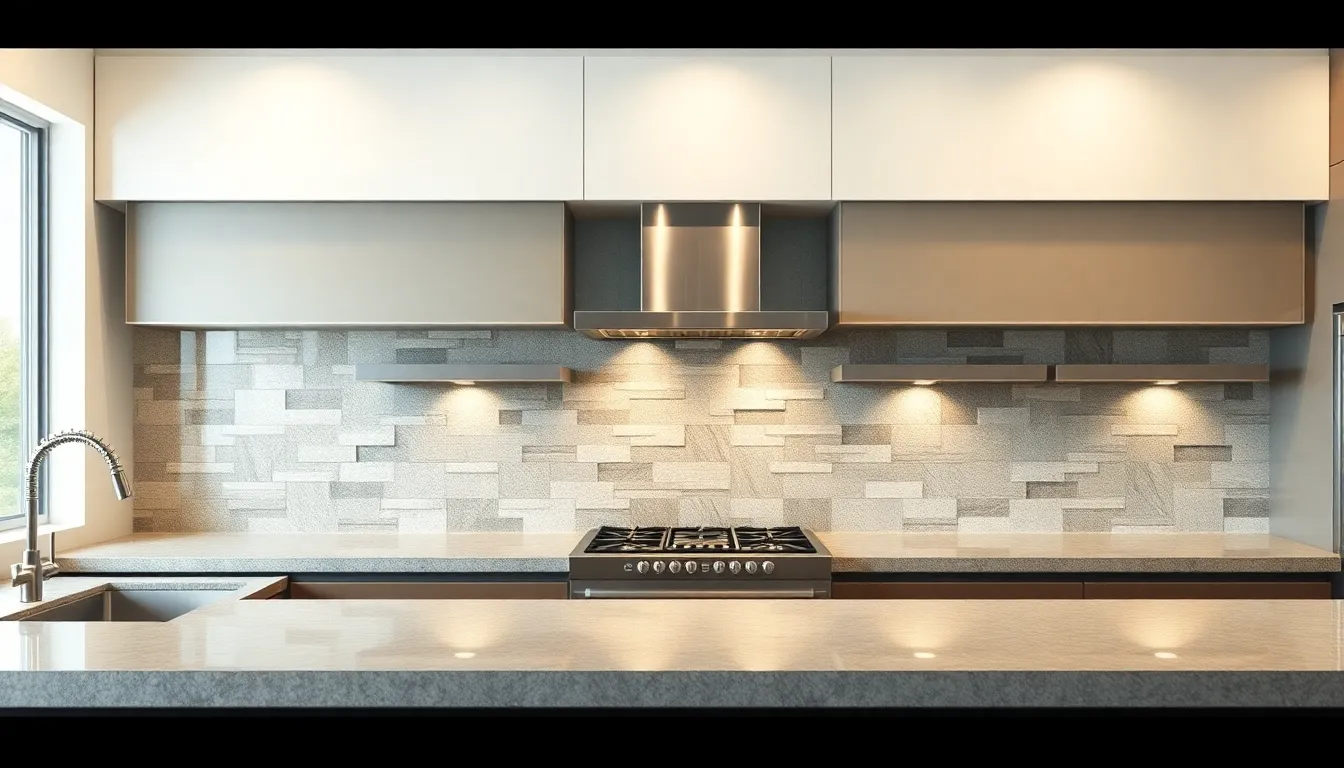
A variety of materials exist for kitchen backsplashes, allowing for both style and functionality. Each option offers distinct benefits and aesthetic appeals.
Ceramic Tile
Ceramic tile ranks among the most popular choices for backsplashes. Known for its durability, ceramic tile withstands heat and moisture effectively. It comes in various colors, shapes, and textures, allowing for endless design possibilities. Easy installation makes it accessible for DIY enthusiasts, while its cost-effectiveness appeals to budget-conscious homeowners. Ceramic tiles also provide a smooth surface that’s simple to clean, making maintenance hassle-free.
Glass Tile
Glass tile brings a sleek and modern touch to kitchen designs. Available in a range of colors and finishes, this material reflects light beautifully, enhancing the kitchen’s brightness. Glass tiles are non-porous, which promotes easy cleaning and stain resistance. They work well in contemporary and classic designs alike, creating stunning visual effects, especially in mosaic patterns. Installation often requires careful setting to prevent cracking, but the stunning results justify the effort involved.
Natural Stone
Natural stone offers a luxurious and timeless appeal for backsplashes. Materials like granite, quartzite, and marble exhibit distinct veining and color variations, adding a unique character to each installation. While their beauty is undeniable, natural stone requires sealing to prevent staining and moisture infiltration. Regular maintenance helps preserve their elegance and ensures longevity. Homeowners appreciate the robust, high-end look that natural stone provides, making it a popular choice for upscale kitchens.
Stainless Steel
Stainless steel imparts a sleek, industrial vibe to kitchen spaces. This material is resistant to heat, moisture, and stains, making it an ideal option for professional-grade kitchens and home chefs alike. Easy to clean, stainless steel backsplashes can withstand the rigors of cooking without damage. They pair well with modern appliances and cabinetry, creating a cohesive and polished look. The reflective nature of stainless steel also enhances light in the kitchen, providing an open, airy feel.
Design Considerations for Backsplash
Selecting the right backsplash involves thoughtful decisions that impact both functionality and aesthetics.
Color and Pattern Choices
Color and pattern selections can dramatically influence a kitchen’s ambiance. Neutral tones like white or gray contribute to a clean, minimalist look. Vibrant colors create energetic spaces, while pastel shades can evoke calmness. Patterns, including geometric shapes and floral motifs, add visual interest. Homeowners often use backsplashes as opportunities to showcase personal style. A bold patterned tile might serve as a focal point, drawing attention and sparking conversation. Coordinating with cabinetry and countertops enhances overall harmony in the kitchen design. Minimalist designs complement modern spaces, while intricate mosaics often suit traditional themes. Ultimately, decisions about colors and patterns should reflect individual taste and kitchen dynamics.
Size and Layout Options
Size plays a crucial role in backsplash design. Standard tiles, such as 3×6 inches for subway tiles, frequently dominate kitchen layouts. Larger tiles can create a seamless look, reducing grout lines and enhancing visual flow. Homeowners might opt for a full-height backsplash that reaches the countertops for a cohesive effect. Layouts like stacked or herringbone patterns introduce unique textures that engage the eye. Selecting a layout can also optimize the use of space; vertical designs may create an illusion of height, while horizontal arrangements can widen the appearance of narrow kitchens. Each size and layout choice can significantly affect how the kitchen feels, making thoughtful consideration important.
Installation Tips and Techniques
Installing a backsplash can significantly enhance a kitchen’s appeal. Knowing the installation options makes this process smoother.
DIY vs. Professional Installation
Opting for DIY installation offers flexibility and cost savings. Many homeowners find certain materials, like peel-and-stick tiles, easy to work with, enabling them to achieve a personalized look. Professional installation is advisable for intricate designs or challenging materials, such as natural stone, to ensure optimal results and durability. Those uncomfortable with tools or less experienced in home projects often benefit from hiring a contractor. Weighing costs against skill level and desired outcomes determines the best choice for each individual.
Tools and Materials Needed
Gathering the right tools and materials is crucial for a seamless installation. Essential items include a level, trowel, and tile cutter. A measuring tape ensures precise dimensions, while adhesive and grout are necessary for securing tiles. Safety glasses protect eyes during cutting, and a sponge helps with cleanup. Selecting quality materials, such as ceramic or glass tiles, contributes to longevity and aesthetics. Investing in the correct tools saves time and effort, facilitating a successful backsplash project.
Maintenance and Cleaning for Backsplashes
Caring for a backsplash keeps it looking vibrant and new. Regular cleaning typically involves warm, soapy water and a soft cloth; this method works well for most materials, such as ceramic tile and glass. For stubborn stains, a mixture of baking soda and water can effectively lift grime without damaging the surface.
Natural stone requires a bit more attention due to its porous nature. Sealing it every six months prevents stains from oils and pigments. Many homeowners find using pH-balanced cleaners beneficial as harsh chemicals can dull the stone’s finish.
Stainless steel backsplashes demand specialized care. Frequent wiping with a non-abrasive cleaner ensures they remain free of fingerprints and smudges. Utilizing a microfiber cloth reduces scratching while maintaining the surface’s shine.
Glass tile surfaces offer easy maintenance. Simple daily wipes with glass cleaner keep them sparkling. It’s important to address spills promptly to prevent soap scum buildup.
For more intricate designs, like mosaics, thorough cleaning requires careful attention. A soft brush or old toothbrush helps reach crevices effectively, allowing for a deeper clean. Many readers appreciate that weekly cleaning routines can extend the lifespan of the backsplash.
Preventive measures work wonders, such as splatter guards or just being mindful while cooking. Routine maintenance ensures that the kitchen backsplashes remain stylish and functional over time. Keeping these tasks in mind preserves not just aesthetics but also the overall integrity of the kitchen.
Choosing the right backsplash can transform a kitchen into a stylish haven. With a plethora of materials and designs available homeowners have the opportunity to create a space that reflects their personality and enhances functionality. Whether opting for classic ceramic tiles or bold mosaics each choice tells a story and adds character.
Investing time in selecting the perfect backsplash pays off in both aesthetics and practicality. Regular maintenance ensures that these beautiful surfaces remain vibrant and functional for years to come. By considering design elements and installation options homeowners can achieve a cohesive and inviting kitchen that’s both a joy to cook in and a delight to showcase.

