


Imagine stepping into a kitchen that reflects your unique style and culinary dreams. Custom kitchens aren’t just about cabinets and countertops; they’re the heart of the home where memories simmer and laughter bubbles. Whether you’re a gourmet chef or a takeout enthusiast, a tailored kitchen can elevate your cooking game and impress your guests—because who doesn’t want to show off their kitchen prowess while simultaneously avoiding the dishes?
Overview of Custom Kitchens
Custom kitchens represent a personalized approach to kitchen design, blending functionality with individual style. They allow homeowners to create spaces that reflect their culinary preferences and aesthetic tastes.
What Are Custom Kitchens?
Custom kitchens are tailored to meet specific needs and desires. They often involve unique layouts, materials, and finishes that cannot be found in pre-fabricated options. Each element, from cabinetry to countertops, is chosen based on the homeowner’s requirements. Homeowners can select sizes, shapes, and features that enhance both usability and beauty. Personalization empowers individuals to transform their visions into reality.
Benefits of Choosing Custom Kitchens
Choosing a custom kitchen presents numerous advantages. Custom designs ensure efficient use of space, catering to unique room dimensions. Enhanced storage solutions like pull-out shelves and specialized cabinetry can improve organization. Quality craftsmanship often leads to longer-lasting products, providing better value over time. A custom kitchen also increases property value, appealing to potential buyers. Ultimately, these kitchens create an environment that fosters creativity and enjoyment in cooking and entertaining.
Design Considerations
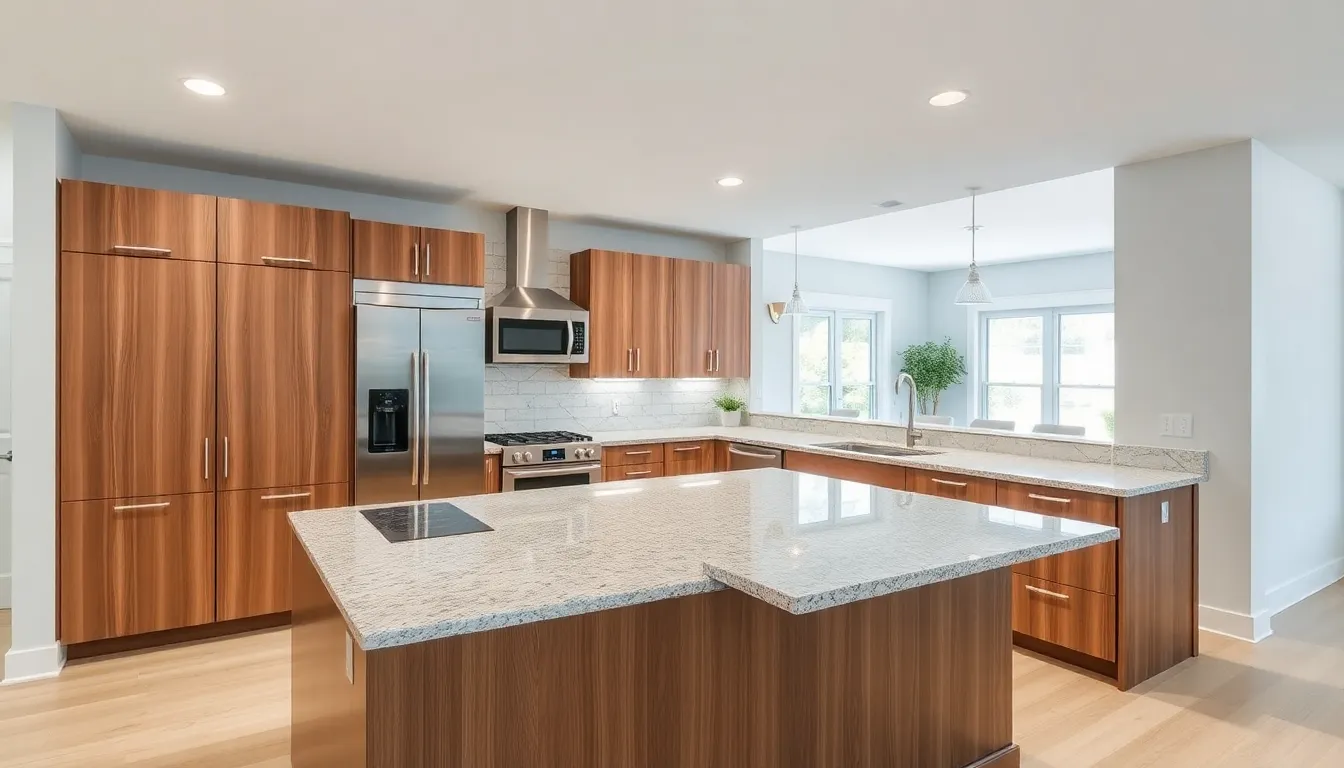
Design considerations in custom kitchens focus on creating an efficient and visually appealing space. Effective planning takes into account both functionality and personal style.
Space Planning
Space planning plays a vital role in ensuring that the kitchen meets the homeowner’s needs. Efficient layouts maximize workflow, incorporating the work triangle concept, which optimizes movement between the stove, sink, and refrigerator. Custom cabinetry can create more storage opportunities, accommodating specific items like small appliances or cookware. Open layouts allow for better traffic flow and interaction, especially in homes where the kitchen serves as a gathering place. Considering the dimensions and layout helps avoid overcrowding and enhances usability.
Style and Aesthetics
Style and aesthetics significantly impact the overall feel of a custom kitchen. Choosing a design theme, whether modern, traditional, or farmhouse, sets the tone for the space. Selecting materials like wood, metal, or stone can influence both durability and appearance. Countertop options range from quartz to granite, providing numerous choices for aesthetic appeal and maintenance. Color schemes should harmonize with other home elements while reflecting personal taste. Lighting fixtures provide not only illumination but also style and ambiance, enhancing functionality and visual interest.
Materials and Finishes
Custom kitchens utilize a range of materials and finishes, allowing for personalization that reflects individual style and functionality requirements. Choices in cabinetry and countertops significantly enhance both aesthetics and practicality.
Cabinetry Options
Classic wood, modern laminate, and elegant metal cabinetry present diverse styles. Custom wood options include maple, cherry, and oak, providing warm tones and durability. Open shelving offers accessibility while showcasing decorative items. Finishes vary from matte to high gloss, allowing for tailored looks that fit any kitchen theme. Homeowners can select hardware, such as knobs and pulls, that complements the cabinetry design. Incorporating soft-close mechanisms enhances usability, ensuring a seamless experience.
Countertops and Backsplashes
Granite, quartz, and marble serve as popular countertop materials, each providing distinct benefits. Granite boasts durability and resistance to heat, while quartz offers a non-porous surface that simplifies maintenance. Creative backsplashes made from tile, glass, or stone enhance visual appeal and protect walls from cooking splatters. Homeowners can choose patterns and colors that tie together the overall kitchen design. For example, a subway tile backsplash can add a classic touch, while mosaic tiles introduce intricate details.
Budgeting for Custom Kitchens
Budgeting for custom kitchens requires clear understanding of costs involved. Expect expenses to vary significantly based on factors like materials and design complexity.
Understanding Costs
Custom kitchen costs can range widely. Average kitchen renovations cost between $20,000 and $50,000, depending on size and scope. Homeowners should consider expenses for cabinetry, countertops, appliances, and labor. Cabinetry often represents the largest portion, typically around 30 to 40 percent of the total budget. Materials matter; choosing high-quality wood or granite can quickly increase costs. Installation fees and design consultations also factor into the overall price. Assessing these elements helps establish a realistic budget aligned with individual preferences and expectations.
Value for Investment
Investing in a custom kitchen returns significant value. Properly designed kitchens can yield returns of up to 80 percent when selling a home. Custom elements enhance not only functionality but also aesthetic appeal, increasing buyer interest. Quality materials and craftsmanship contribute to longevity, allowing the kitchen to maintain its value over time. Homeowners should treat the custom kitchen as an investment in their lifestyle and property. Improving usability through tailored designs elevates everyday cooking experiences while also attracting potential buyers later.
Working with Professionals
Engaging professionals during a custom kitchen project fosters a seamless design and renovation process. Homeowners can benefit significantly from collaborating with experienced designers and contractors.
Choosing the Right Designer
Selecting an appropriate designer ensures alignment with individual style preferences and functional needs. A good designer possesses a solid portfolio that showcases various design styles. They engage clients through comprehensive consultations, helping clarify priorities and vision. References from previous clients or online reviews can guide homeowners in making informed choices. Expertise in the latest trends and materials also proves beneficial, enabling the designer to suggest innovative solutions tailored to the space.
Collaborating with Contractors
Effective collaboration with contractors enhances the execution of custom kitchen designs. Communication sets the foundation for a successful partnership. Homeowners should share detailed plans and specifications to ensure the contractor understands the vision. Establishing realistic timelines and budgets allows for smoother project management. Skilled contractors bring valuable insights, recommending materials that suit both functional and aesthetic requirements. Regular check-ins throughout the project streamline updates and address any concerns promptly.
Creating a custom kitchen is an investment in both functionality and personal expression. It transforms a standard cooking space into a unique environment that resonates with the homeowner’s lifestyle and tastes. By focusing on tailored designs and quality materials, homeowners can achieve a kitchen that not only meets their culinary needs but also enhances the overall aesthetic of their home.
The process of designing a custom kitchen involves careful planning and collaboration with professionals. This ensures that every detail aligns with the homeowner’s vision and practical requirements. Ultimately, a well-executed custom kitchen not only elevates daily living but also adds significant value to the property, making it a worthwhile endeavor for any homeowner.

