


Imagine stepping into a kitchen that feels like a culinary command center. Efficient kitchen design isn’t just about aesthetics; it’s about creating a space that works as hard as you do. With the right layout and smart storage solutions, cooking can transform from a chore into an enjoyable experience—without the chaos of tripping over a rogue spatula.
Understanding Efficient Kitchen Design
Efficient kitchen design encompasses functionality and aesthetics. A well-thought-out kitchen layout not only looks good but also improves workflow and organization.
Importance of Efficient Kitchen Design
Understanding how efficient kitchen design impacts cooking is crucial. A well-planned kitchen reduces clutter and increases productivity, leading to a more enjoyable cooking experience. Enhanced function allows for quick meal prep and easy cleanup, saving valuable time. Ultimately, these designs support better ergonomics, minimizing strain on the body during food preparation.
Key Components of Design
Key components of an efficient kitchen design include layout, storage, and appliances. Efficient layouts, such as the work triangle concept, facilitate movement between the sink, stove, and refrigerator. Ample storage solutions, like cabinets and pantry spaces, maximize functionality without overcrowding. Selecting energy-efficient appliances contributes to sustainability while improving performance. Each of these elements plays a vital role in creating an efficient space that meets culinary needs.
Planning Your Space
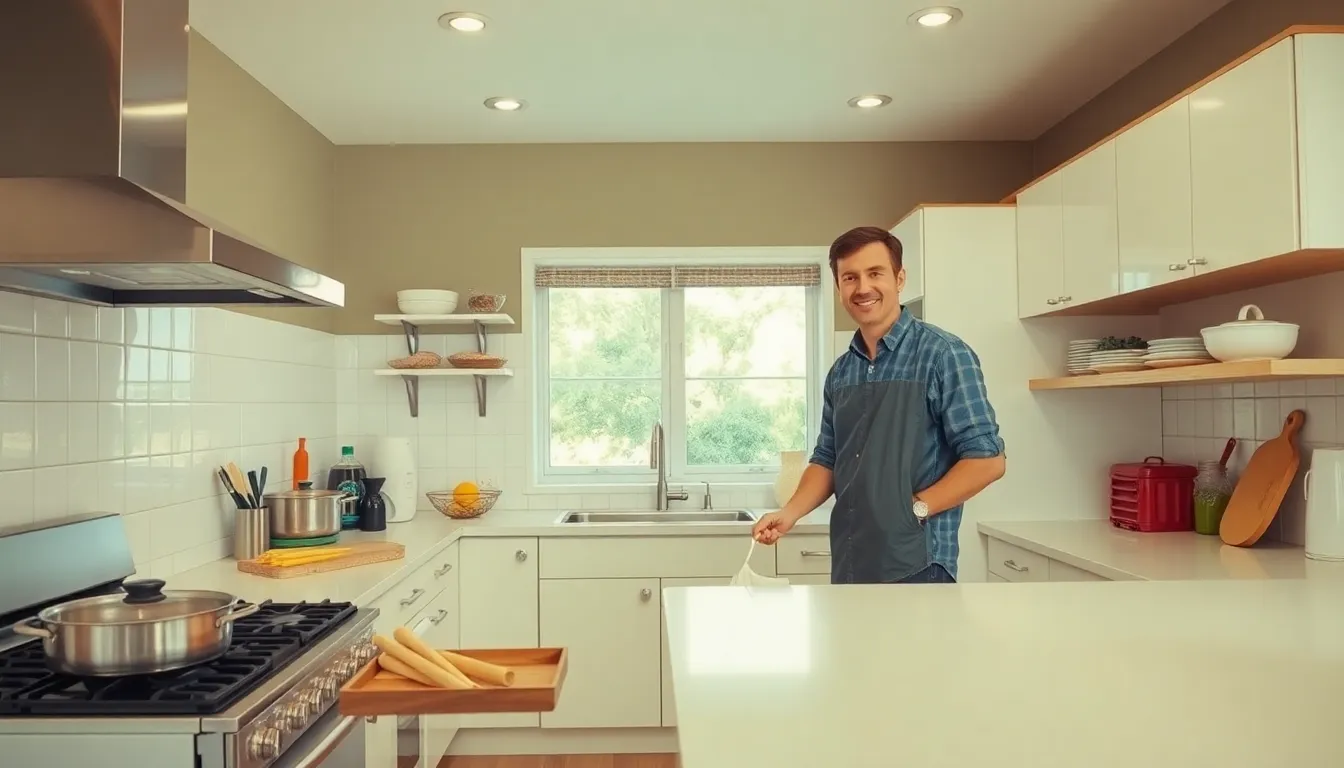
Effective kitchen planning maximizes efficiency and enhances productivity. A thoughtful layout significantly contributes to a positive cooking experience.
Analyzing Your Kitchen Layout
Assessing the current kitchen layout provides insights into workflow and functionality. The work triangle concept—sink, stove, refrigerator—should maintain efficiency while reducing unnecessary movement. Space optimization helps in defining areas for prep, cooking, and cleaning. Zones facilitate a smoother cooking experience, allowing for better organization of tools and ingredients. Consider traffic flow, ensuring that pathways remain clear to avoid collisions. Maintaining an open layout often fosters communication during meal preparation, benefiting user interactions.
Choosing the Right Tools and Appliances
Selecting appropriate tools and appliances increases overall kitchen efficiency. Prioritize multifunctional appliances that save space and time, such as toaster ovens or blenders with multiple functions. Energy-efficient appliances not only reduce utility bills but also enhance sustainability. A balance between size and capability is vital; smaller kitchens benefit from compact tools, while larger spaces can accommodate larger equipment. Achieving the right mix of tools simplifies meal prep, resulting in organized storage and easy access. Regularly updated inventory also ensures that all needed appliances remain on hand, promoting consistent cooking success.
Maximizing Functionality
Maximizing functionality is vital in an efficient kitchen design. A well-planned layout ensures that items are easily accessible and workflow remains uninterrupted.
Storage Solutions
Optimize cabinet space with adjustable shelves and pull-out drawers. Developers recommend using vertical space for storage, such as wall-mounted racks or open shelving. Drawers equipped with dividers enhance organization for utensils and cutlery. Utilizing corner cabinets with lazy Susans makes it easy to reach items. Consider integrating appliances like dishwashers and microwaves into cabinetry for a streamlined appearance. Finally, include pantry solutions that allow for easy stock management, preventing clutter and improving efficiency.
Workflow Optimization
Improving workflow requires strategic placement of key components. Start with the work triangle, ensuring the sink, stove, and refrigerator are positioned for easy access. Group similar activities together, such as meal prep zones or cleaning areas. Consider adding a kitchen island to facilitate prep work and socializing during cooking. Install adequate lighting in work areas, allowing for improved visibility and safety. Efficiency increases when identifying traffic patterns, reducing disruptions during meal prep. In short, thoughtful layout decisions lead to smoother cooking experiences.
Aesthetic Considerations
Aesthetic elements play a significant role in efficient kitchen design. They can enhance the overall ambiance while contributing to functionality.
Color Schemes and Materials
Choosing cohesive color schemes influences mood and perception. Light colors can make a kitchen feel larger, promoting an airy atmosphere. Darker hues bring warmth but may require strategic lighting. Selecting durable materials withstands daily wear while maintaining visual appeal. For instance, quartz countertops combine beauty with longevity, making them a popular choice. Choosing finishes that complement cabinetry and appliances creates a harmonious look. Neutrals paired with vibrant accents work well to instill personality without overwhelming the space.
Incorporating Personal Style
Incorporating personal style ensures a kitchen reflects individual tastes and preferences. Selecting decorative elements, such as art or cookware, adds character and uniqueness. Unique backsplashes present opportunities for creative expression, blending function with aesthetic appeal. Accessorizing with textiles such as curtains and table linens introduces texture and warmth. Custom cabinetry can showcase distinct style while maximizing storage efficiency. Thoughtful details, like vintage touches or modern fixtures, contribute to an inviting atmosphere. Every choice shapes not just the visual landscape but the overall culinary experience.
Efficient kitchen design is a blend of functionality and aesthetics that transforms the cooking experience. By prioritizing layout and storage solutions, homeowners can create a space that enhances productivity and minimizes chaos. Thoughtful planning not only streamlines meal prep but also fosters a welcoming atmosphere.
Incorporating energy-efficient appliances and optimizing workflow through the work triangle are essential strategies for a successful kitchen. Regularly reassessing the kitchen’s layout and inventory ensures that it meets evolving needs. Ultimately, a well-designed kitchen supports a harmonious balance between form and function, making it a joy to cook and gather.

