Imagine stepping into a kitchen that not only looks fabulous but also gives Mother Nature a high-five. Welcome to the world of green kitchens, where eco-friendliness meets style. Gone are the days of bland, uninspired spaces. Today’s green kitchens are vibrant, innovative, and packed with sustainable solutions that’ll make your friends green with envy—pun intended!
Overview Of Green Kitchens
Green kitchens focus on sustainability while incorporating modern design methods. These kitchens utilize eco-friendly materials, energy-efficient appliances, and innovative layouts that minimize waste. Homeowners often select cabinets made from reclaimed wood or bamboo to reduce deforestation impacts.
In terms of energy, many green kitchens feature ENERGY STAR-rated appliances, which consume less electricity. Such appliances lower utility bills and decrease carbon footprints. Lighting also plays a crucial role; LED fixtures provide bright illumination while maintaining energy efficiency.
Water conservation is essential in green kitchens. Low-flow faucets and dishwashers save significant amounts of water without sacrificing performance. Harvesting rainwater for irrigation or using greywater systems adds another layer of sustainability.
Durable materials are emphasized in the design of green kitchens. These choices ensure longevity and minimize the need for frequent replacements. Sustainable countertops made from recycled glass or quartz exemplify this commitment to durability and style.
Ventilation systems improve air quality in a green kitchen, contributing to a healthier environment. Natural ventilation options, such as operable windows, complement mechanical systems for optimal airflow. Choosing non-toxic paints and finishes reduces harmful emissions and supports overall health.
Green kitchen aesthetics reflect the harmony between nature and design. Color palettes often include earthy tones that create a calming atmosphere. Combining traditional elements with contemporary fixtures leads to spaces that feel inviting and stylish.
Thoughtful planning leads to effective organization in green kitchens, optimizing workspace and functionality. Smart storage solutions allow efficient use of space, reducing clutter. Implementing composting stations further enhances eco-friendliness while promoting sustainable practices in daily cooking.
Benefits Of Green Kitchens
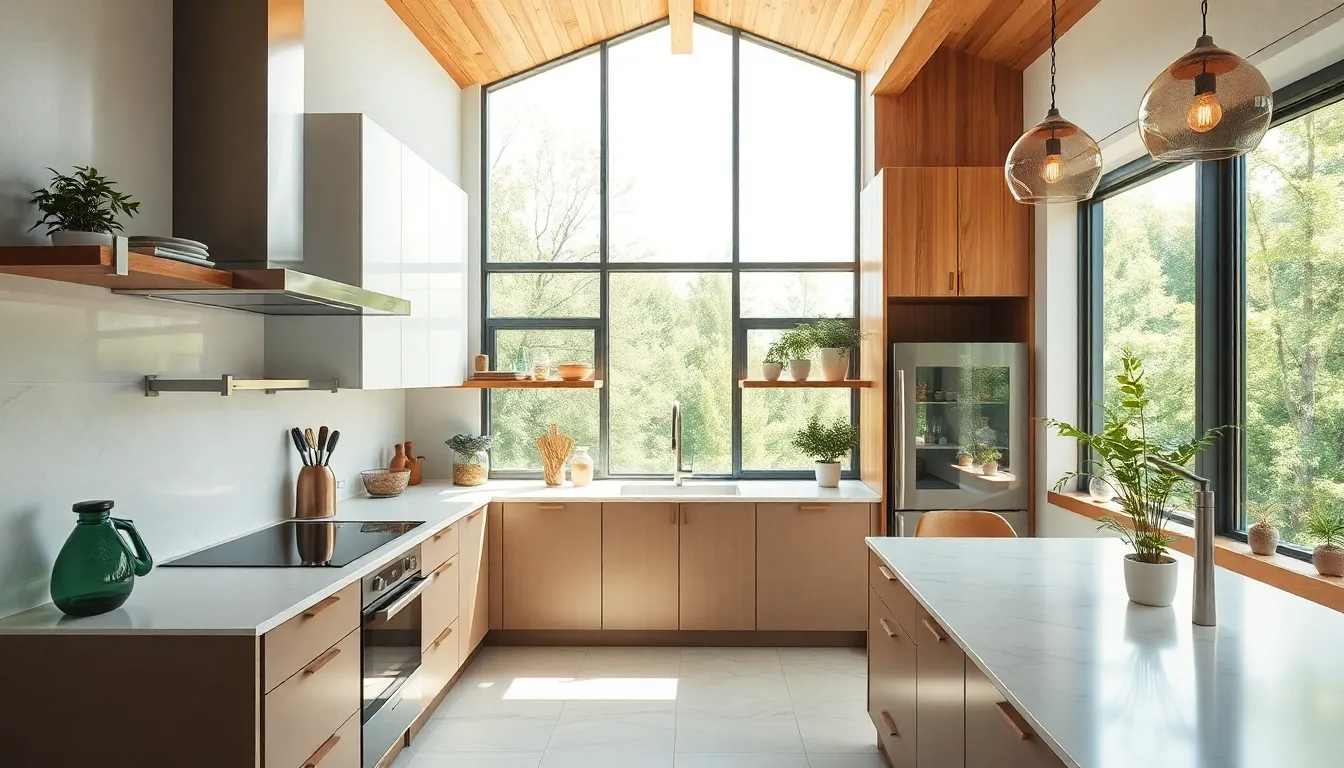
Green kitchens offer significant advantages that extend to both the environment and personal health. They serve as perfect examples of how sustainable practices can enhance everyday living.
Environmental Impact
Green kitchens contribute positively to environmental sustainability. They often use eco-friendly materials that reduce the demand for new resources. Incorporating energy-efficient appliances decreases energy consumption, resulting in lower greenhouse gas emissions. Many features promote water conservation, such as low-flow faucets and efficient dishwashers. Installing systems for rainwater harvesting allows homeowners to repurpose natural resources. In addition, using natural ventilation helps maintain indoor air quality, lessening reliance on mechanical systems. By prioritizing these elements, green kitchens lessen the overall carbon footprint.
Health Advantages
Health benefits abound in green kitchens, creating safer living spaces. Non-toxic paints and finishes help maintain lower levels of harmful chemicals in the home. Often designed with natural lighting, these kitchens reduce the need for artificial illumination, promoting a more inviting atmosphere. Fresh air circulation supports respiratory health and overall well-being. Using sustainable materials minimizes exposure to allergens and toxic substances. Moreover, thoughtful layouts enhance functionality, reducing stress during meal preparation. By fostering a healthier kitchen environment, sustainable options support both physical and mental wellness.
Key Components Of Green Kitchens
Green kitchens prioritize eco-friendly practices that enhance both sustainability and style. This approach demands an integration of energy-efficient appliances, sustainable materials, and water conservation methods.
Energy Efficiency
Energy efficiency represents a cornerstone of green kitchen design. Homeowners often select ENERGY STAR-rated appliances, which use less energy while maintaining performance. Lighting choices matter too; LED fixtures provide bright, clear illumination and consume significantly less energy than traditional bulbs. Effective insulation and energy-efficient windows help keep heating and cooling costs down. Smart technology also supports energy management, allowing for control of appliances remotely, reducing waste when not in use.
Sustainable Materials
Sustainable materials form the backbone of green kitchen construction. Reclaimed wood and bamboo cabinets illustrate a commitment to reducing deforestation. Choices extend to countertops made from recycled glass or quartz, which combine durability with eco-friendliness. Flooring options include sustainable choices like cork or responsibly sourced hardwood. Paint and finishes are often non-toxic, reducing harmful emissions and contributing to a healthier home environment. Each material selection reinforces the kitchen’s aesthetic while maintaining a focus on environmental responsibility.
Water Conservation
Water conservation proves essential in designing green kitchens. Low-flow faucets and dishwashers save significant amounts of water without sacrificing performance. Rainwater harvesting systems further enhance sustainability efforts and provide an alternative water source for non-potable uses. Greywater systems recirculate water from baths and sinks for irrigation, contributing to resource efficiency. Thoughtful landscaping can integrate xeriscaping principles, reducing the need for extensive watering. By embracing these water-saving technologies, green kitchens support both the environment and household budgets.
Designing A Green Kitchen
A green kitchen emphasizes sustainability alongside modern design. Thoughtful design enhances functionality while maintaining eco-conscious principles.
Layout Considerations
Creating an efficient layout in a green kitchen optimizes workflow. Consider a triangular arrangement between the stove, sink, and refrigerator. This design minimizes unnecessary movements. Ample countertop space serves various tasks and presents a clutter-free zone. Use deep drawers and vertical storage solutions for organization. Incorporating natural light through large windows enhances ambiance. Strategically placed cabinetry can hide appliances, maintaining a streamlined look. Open shelving displays eco-friendly kitchenware, promoting both aesthetic appeal and accessibility.
Choosing Appliances
Selecting energy-efficient appliances is vital in a green kitchen. Look for ENERGY STAR-rated models that significantly reduce electricity consumption. Induction cooktops and convection ovens offer energy savings compared to traditional options. Refrigerators with efficient insulation and programmable settings further minimize energy costs. Consider using smart appliances that sync with mobile devices for better control of power usage. Dishwashers equipped with eco-modes conserve both water and electricity during cycles. Prioritize brands committed to sustainable manufacturing processes, ensuring a minimal environmental impact. These choices enhance kitchen performance while promoting eco-friendliness.
Embracing a green kitchen is more than just a trend; it’s a commitment to sustainability and health. These spaces combine style and functionality while prioritizing eco-friendly materials and energy-efficient appliances. Homeowners can create a vibrant atmosphere that reflects their values and enhances their well-being.
By focusing on thoughtful design and innovative solutions, green kitchens not only reduce environmental impact but also foster a healthier living space. With careful planning and the right choices, anyone can transform their kitchen into a sanctuary that supports both culinary creativity and environmental stewardship. The journey toward a greener kitchen is a step toward a more sustainable future.