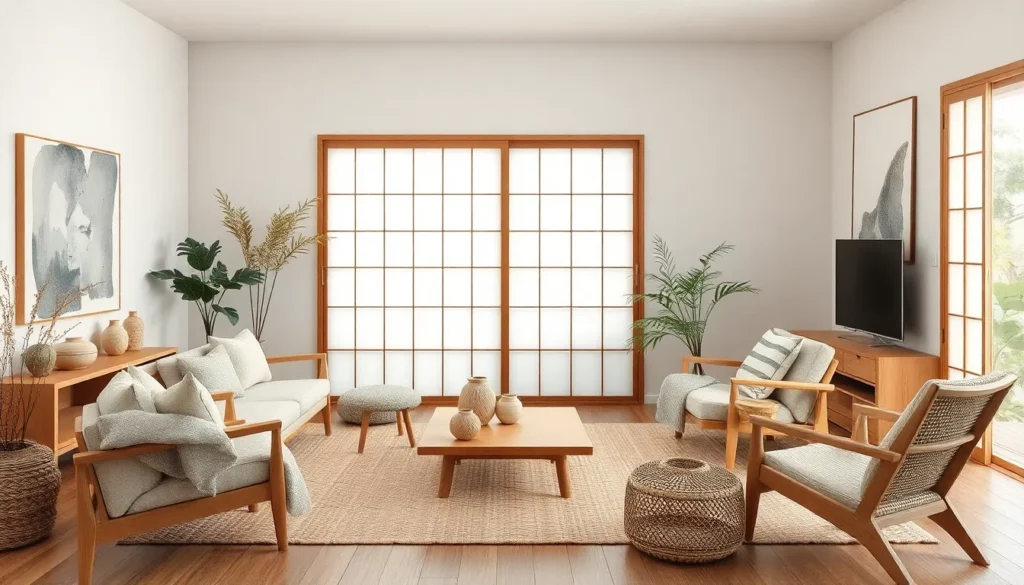
Imagine a world where minimalist Japanese elegance meets the cozy warmth of Scandinavian design. Welcome to Japandi interior design, the harmonious blend that’s taking the decor scene by storm. This style isn’t just about aesthetics; it’s a lifestyle choice that promises to turn even the most chaotic spaces into serene sanctuaries.
Overview of Japandi Interior Design
Japandi interior design combines minimalist Japanese aesthetics with the comforting feel of Scandinavian style. This approach prioritizes simplicity, functionality, and natural elements, creating spaces that evoke tranquility. Clean lines often characterize Japandi spaces, while warm wood textures add depth and warmth.
Colors play a significant role in this design style. Neutral palettes dominate, featuring shades such as beige, gray, and muted pastels. These colors foster harmony and promote a peaceful ambiance. Decorative elements tend towards minimalist items, avoiding clutter and prioritizing quality over quantity.
Furniture selection reflects the merging of these two styles. Japanese influences introduce low-profile furniture, while Scandinavian design emphasizes light wood and organic shapes. Each piece typically embodies an aesthetic and functional purpose, contributing positively to overall cohesiveness.
Natural materials enhance the Japandi aesthetic. Bamboo, rattan, and linen often appear, reinforcing a connection to nature. Sustainable practices are integral, marrying modern living with environmental awareness.
Lighting also plays a critical role in enhancing the overall atmosphere. Soft, diffused light creates an inviting environment while highlighting the simplicity of the design. Incorporating large windows or simple light fixtures fosters a bright and airy feeling.
Accessories remain minimal yet thoughtfully chosen. Handmade pottery, woven baskets, and simple art pieces add personal touches without overwhelming the senses. These details elevate the space, maintaining balance and harmony throughout.
Ultimately, Japandi interior design offers a sanctuary of calm, combining two cultures to create a uniquely refreshing living experience.
Key Characteristics of Japandi Style
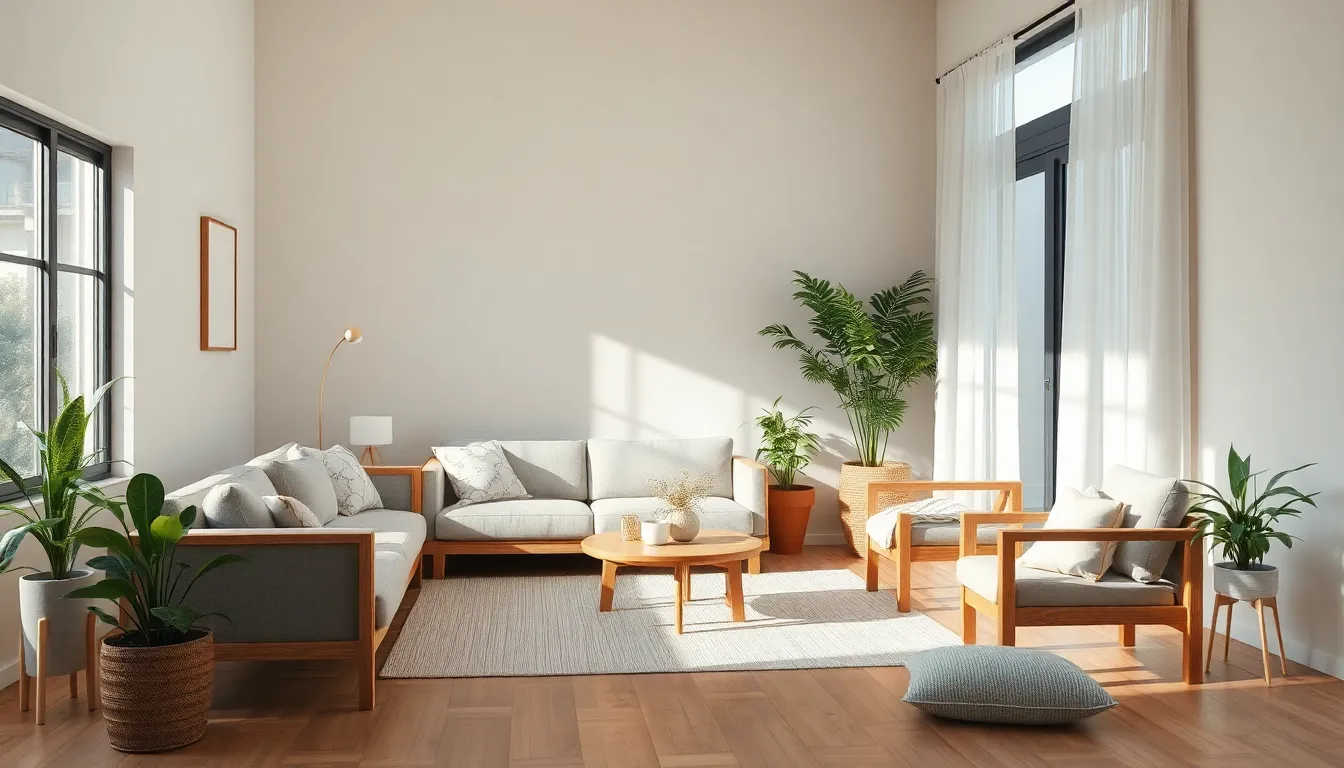
Japandi design embodies a blend of minimalist Japanese aesthetics and Scandinavian warmth. This style thrives on simplicity and functionality, ensuring each element contributes to an overall sense of calm.
Minimalism in Japandi Design
Minimalism defines Japandi by emphasizing clean lines and uncluttered spaces. In this style, less is more, creating an environment that inspires tranquility. Functionality drives furniture choices, which often serve multiple purposes. Open spaces enhance the feeling of serenity, ensuring a harmonious experience. Accessories remain minimal, permitting individual pieces to stand out in their beauty. Zen influences from Japan encourage mindfulness, while Scandinavian design contributes to an inviting atmosphere.
Natural Materials and Textures
Natural materials play a significant role in Japandi’s appeal. Wood serves as a primary element, reflecting both styles’ focus on nature. Incorporating materials like bamboo, rattan, and linen fosters a warm, organic feel. Textures invite touch and enrich the aesthetic experience, promoting a sense of connection to the outdoors. Sustainable practices are a priority, making eco-friendly options integral to design choices. Soft textiles offer comfort, pairing with wood tones to create a cohesive look that feels both casual and elegant.
Color Palette in Japandi Interiors
The color palette in Japandi interiors embodies tranquility and simplicity. Neutral shades dominate the space.
Earthy Tones and Soft Neutrals
Earthy tones create a calming foundation in Japandi design. Shades of beige, taupe, and soft gray promote a sense of peace. Soft neutrals blend effortlessly, allowing for a harmonious balance within the home. Warm undertones in these colors evoke a welcoming atmosphere. Selected furniture featuring these tones integrates seamlessly with natural materials like wood and textiles. By prioritizing simplicity, each hue enhances the serene vibe essential to Japandi style. Natural light accentuates these shades, further enriching the cozy ambiance.
Incorporating Accent Colors
Accent colors introduce character without overwhelming the minimalist aesthetic. Deep greens, muted blues, and gentle terracotta appear frequently. These hues add depth and visual interest while maintaining harmony. Thoughtful placement ensures accent colors highlight specific features, such as artwork or textiles. Accessories incorporate these colors subtly, avoiding clutter. By limiting the use of bold shades, the design retains a tranquil feel. Small pops of color against soft neutrals create a balanced, inviting environment. Each chosen accent enhances the overall Japandi essence, marrying both Japanese and Scandinavian influences seamlessly.
Furniture and Layout in Japandi Spaces
Furniture and layout in Japandi design blend function with aesthetics, creating spaces that feel both serene and inviting.
Functional and Aesthetic Furniture Choices
Furniture choices prioritize simplicity and practicality. Low-profile Japanese tables complement light wood Scandinavian chairs, enhancing both comfort and style. Natural materials play a significant role, with wood, bamboo, and linen being favored for their warmth and texture. These selections maintain a sense of balance, allowing each piece to serve multiple purposes. Minimalist designs reflect clean lines, ensuring that each item contributes to the overall tranquility of the space. Handmade elements add character, integrating artisanal touches that elevate the interior without creating clutter.
Open Space Concepts
Open space concepts define Japandi design by promoting airflow and visual harmony. Rooms often flow seamlessly into one another, encouraging movement and connection. Walls remain unobtrusive, allowing natural light to illuminate the environment. Furniture placement aligns with principles of simplicity, fostering uncluttered surfaces and promoting ease of living. Zones for different activities exist without physical barriers, blending functionality with an airy atmosphere. Organizing elements thoughtfully contributes to a calming aesthetic, inviting relaxation while maintaining a modern practicality.
Decor Elements and Accessories
Decor elements and accessories in Japandi design emphasize simplicity and thoughtful selection. These pieces enhance the tranquil atmosphere while maintaining minimalism.
Incorporating Art and Ceramics
Art and ceramics play significant roles in Japandi interiors. Handmade pottery can create focal points, offering unique character. Subtle, monochromatic artwork complements neutral palettes without overwhelming spaces. Thoughtful arrangements of these pieces maintain balance and harmony throughout the room. Decorators often choose abstract forms, reflecting both Japanese and Scandinavian styles while adding personal touches. Displaying art on clean, simple shelves enhances visual interest while retaining an uncluttered look.
Plant Life and Natural Elements
Plant life adds vibrancy and freshness to Japandi spaces. Incorporating indoor plants introduces natural colors and textures, enhancing the serene environment. Pairing plants with minimalist pots encourages a connection to nature. Options like ferns and bonsais thrive well in these settings, adding organic beauty. Natural elements such as wood or stone can enhance the aesthetic. Integrating textiles made from natural fibers like cotton or linen contributes to warmth and comfort without compromising simplicity.
Japandi interior design represents a harmonious blend of two distinct cultures that prioritize simplicity and functionality. This style’s emphasis on natural materials and neutral color palettes fosters an inviting atmosphere that promotes tranquility. By incorporating thoughtful accessories and maintaining open spaces, Japandi transforms homes into serene retreats.
As more individuals seek balance in their living environments, embracing Japandi can lead to a more mindful lifestyle. Its sustainable practices resonate with modern values, making it not just a design choice but a commitment to a calmer and more connected way of living. Adopting Japandi principles can inspire a lasting sense of peace and well-being in any home.