


A cluttered pantry can feel like a black hole for snacks and ingredients, where good intentions go to die. It’s time to rescue those forgotten cans of beans and that half-eaten bag of quinoa from the depths of chaos. With a little creativity and some clever organization, turning your pantry into a well-oiled machine is totally possible.
Importance Of Kitchen Pantry Organization
Effective kitchen pantry organization plays a crucial role in overall kitchen efficiency. An organized pantry reduces wasted food and minimizes grocery expenses. Keeping items visible and accessible prevents food items from being forgotten and helps maintain a balanced diet.
Accessibility increases when frequently used items are stored at eye level. When organizing, she can categorize similar items together, making cooking and meal planning more streamlined. Proper organization also supports easy inventory checks, helping identify items that need replenishing.
Having a well-organized pantry promotes healthier choices. When healthy snacks and ingredients are readily available, meal prep becomes easier and more appealing. An organized pantry also aids in reducing stress during cooking, as search times for ingredients decrease.
Efficiency in meal preparation improves with better organization. A well-arranged pantry allows for quicker access to necessary items, ultimately saving time during busy weeknights. Grouping pantry staples like grains, beans, and canned goods simplifies the cooking process.
Supporting a clean kitchen environment, an organized pantry helps prevent pest infestations. Keeping food items neatly stored diminishes clutter, contributing to a pleasant cooking space. An organized pantry not only elevates functionality but also enhances the overall aesthetic of the kitchen.
Fostering creativity, a well-organized pantry can inspire new recipes and meal ideas. When she knows exactly what ingredients are on hand, it opens the door to experimentation. Knowledge of available items encourages trying new cooking techniques and flavors.
Investing time in kitchen pantry organization yields long-term benefits. She experiences convenience, efficiency, and creativity, all while reducing waste. Maintaining a well-organized pantry cultivates a positive cooking experience that serves both practical and aesthetic needs.
Assessing Your Current Pantry Space
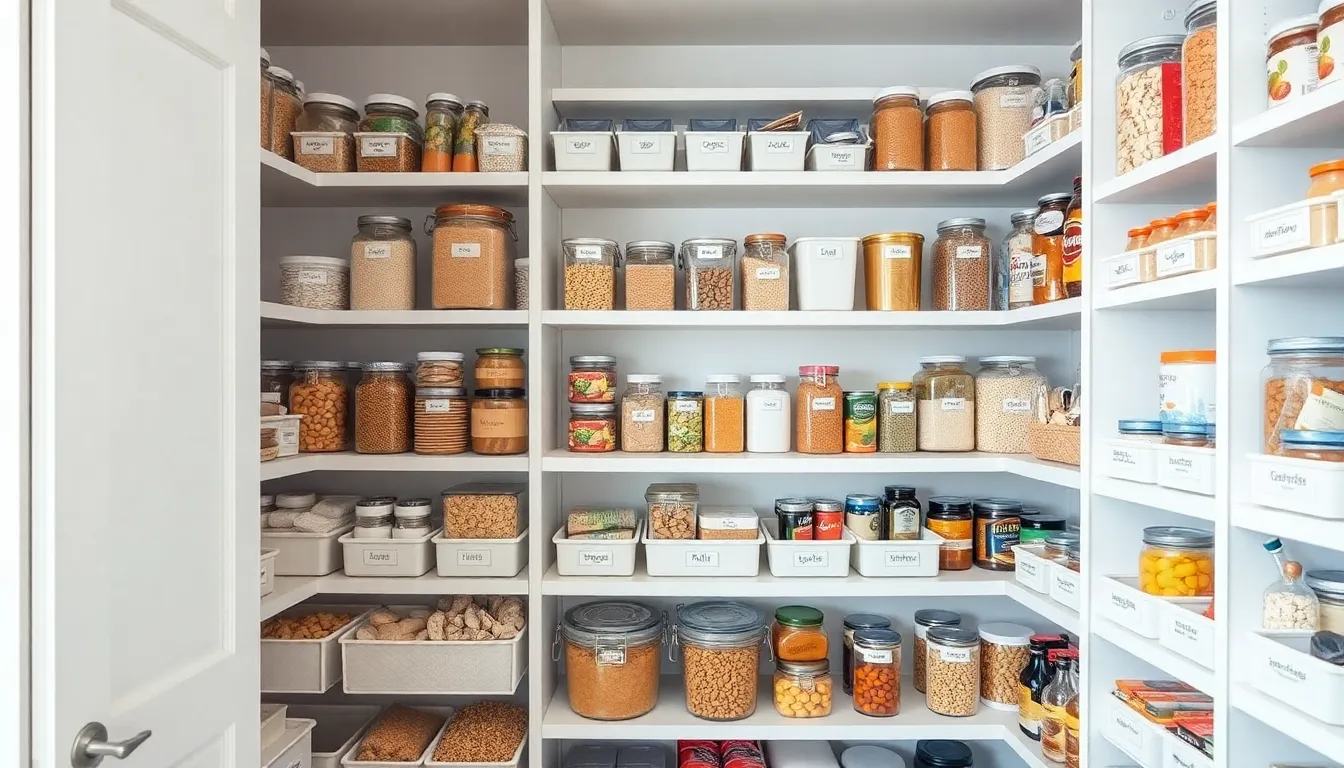
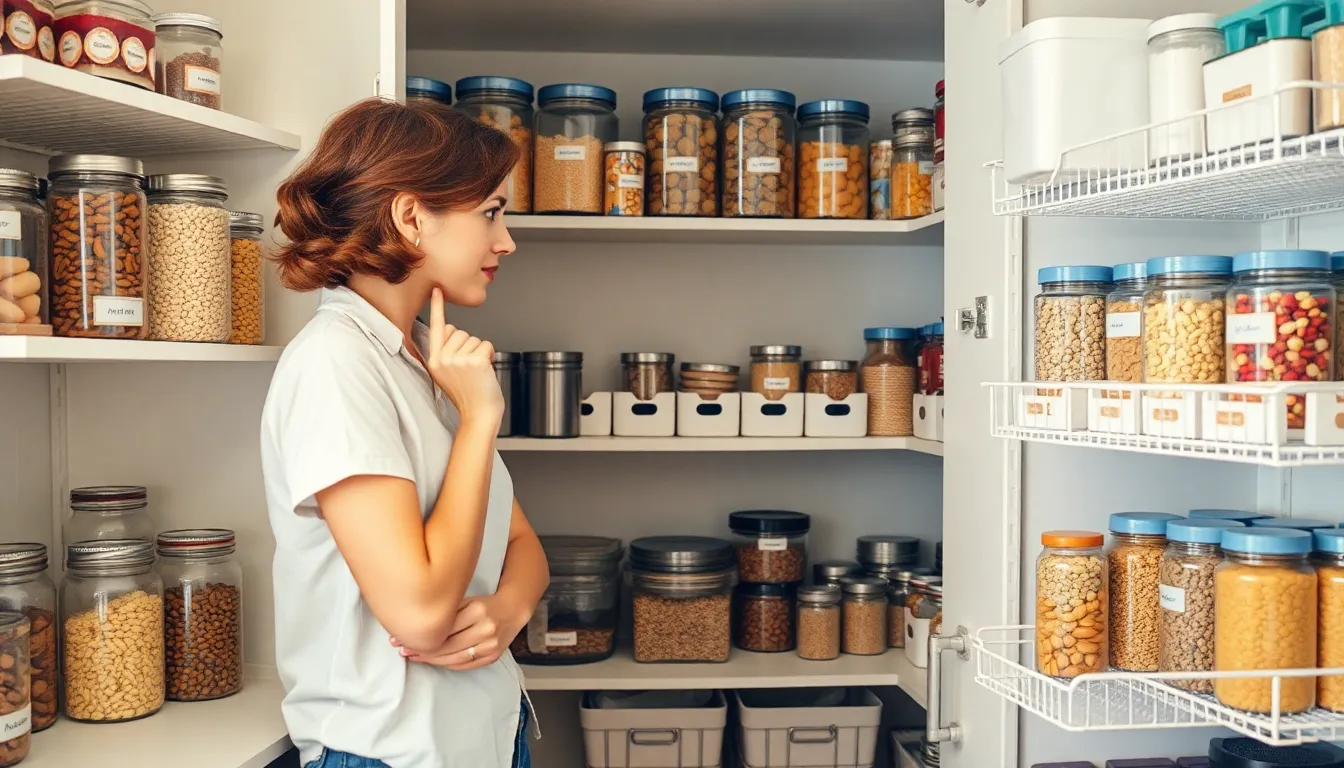
Evaluating your pantry’s current state is essential for effective organization. First, measure your available space to understand dimensions and constraints. Next, assess the items already stored in your pantry to identify what’s frequently used, stored, or expired.
Evaluating Storage Needs
Storage needs vary based on individual cooking habits. Analyze pantry contents, and categorize items into groups like snacks, grains, and canned goods. Consider the frequency of use for each item and prioritize those that are used most often for easy access. Also, evaluate different storage solutions, such as shelves, bins, or jars, to maximize vertical space and optimize accessibility. Incorporating adjustable shelves can create versatile storage options, accommodating taller items when necessary.
Identifying Problem Areas
Identifying problem areas prevents future disorganization. Focus on spaces that tend to accumulate clutter, such as deep shelves or corner cabinets. Verify whether certain sections lack categorization or clarity to streamline item retrieval. Additionally, check for expired or unused products that take up valuable space. Understanding the layout and function of your pantry enables targeted solutions to transform chaotic areas into organized zones, enhancing overall efficiency in the kitchen.
Choosing The Right Storage Solutions
Selecting suitable storage solutions significantly enhances pantry organization. Effective choices maximize space and improve accessibility, allowing for a more efficient cooking experience.
Containers And Bins
Opt for clear containers to easily identify contents. Stackable bins maximize vertical space, creating room for additional items. Airtight containers preserve freshness, preventing stale snacks and spoilage. Use labeled bins to categorize items such as grains, snacks, and baking supplies, ensuring straightforward access. Incorporate pull-out bins for deep shelves; they simplify retrieving less accessible items. Opt for varying sizes to accommodate different types of products, which maintains versatility and organization.
Shelving Options
Consider adjustable shelving to adapt to changing pantry needs. Utilize peel-and-stick shelves to increase usability on both standard and deep shelves. Floating shelves provide additional storage without sacrificing floor space. Incorporate tiered shelving for easy visibility; it allows quick access to spices and smaller containers placed at the back. Use over-the-door organizers to utilize vertical space efficiently, which helps hold snacks or cleaning supplies. Custom cabinetry offers tailored solutions, optimizing the pantry layout based on personal cooking habits.
Organizing Strategies
Effective kitchen pantry organization relies on smart strategies. Implementing categorization and labeling techniques streamlines access to ingredients.
Categorizing Items
Grouping items enhances efficiency. Start by sorting items into categories like grains, canned goods, snacks and baking supplies. Keep frequently used items at eye level for easy access. Reserve lower shelves for heavier items like bulk containers. Use upper shelves for less commonly used items, making space efficient. Storing similar items together simplifies meal planning. For example, dedicate a section for breakfast items or baking essentials. Reassessing these categories regularly keeps the organization fresh and functional.
Labeling And Inventory Management
Labeling promotes organization. Clear labels on containers ensure quick identification of contents. Consider using a label maker or neat handwritten labels. Managing inventory helps avoid overbuying. Regularly checking pantry contents reveals which items need replenishment. Noting expiration dates on containers enhances food safety. Create an inventory checklist that tracks staple items and usage patterns. This practice reduces food waste, saving money in the long term. An organized, labeled pantry not only looks appealing but also supports efficient cooking and meal prep.
Maintenance Tips For A Well-Organized Pantry
Maintaining an organized pantry requires consistent effort and strategic practices. Implementing techniques like regular decluttering and seasonal reviews ensures optimal organization and functionality.
Regular Decluttering
Decluttering should happen monthly or whenever necessary to keep the pantry organized. Removing expired items and restocking frequently used items maintains pantry order. Prioritizing frequently accessed items at eye level facilitates easy reach. Checking for duplicates also reduces overstocking and food waste. Categorizing food items by type prevents confusion and encourages systematic use. Lastly, incorporating a checklist helps track what needs replacing, streamlining the grocery shopping process.
Seasonal Reviews
Seasonal reviews provide an opportunity to refresh pantry organization. Completing these reviews quarterly ensures stale and unused items get addressed. Analyzing cooking patterns during the review supports identifying items that may no longer be useful. Adjusting storage solutions based on seasonal cooking trends enhances functionality. Keeping a list of seasonal staples also allows for timely restocking. Highlighting expiration dates during reviews increases food safety and minimizes waste. These periodic evaluations promote ongoing efficiency and a well-maintained pantry environment.

