Industrial interior design has moved beyond warehouse lofts and converted factories, it’s now a practical, adaptable style for any home. This aesthetic blends raw materials, exposed structural elements, and vintage finds into a cohesive look that feels both rugged and refined. Unlike trendy decor that fades in a season, industrial design has staying power because it focuses on authenticity and function. Whether you’re renovating a single room or overhauling your entire home, this guide walks you through the core principles, materials, and techniques to nail the industrial style without requiring a contractor’s budget.
Table of Contents
ToggleKey Takeaways
- Industrial interior design celebrates raw, honest materials like exposed brick, steel beams, and concrete instead of hiding structural elements, making it a timeless style beyond trendy warehouse conversions.
- Core materials including metal, reclaimed wood, concrete, and brick should remain visible and unpolished—patina and weathered finishes are design features, not flaws.
- Exposed structural features demand preparation and maintenance; confirm no asbestos hazards before removal, and plan for regular cleaning of open shelving and visible ductwork.
- Use neutral color palettes (blacks, grays, whites, browns, greige) as your backdrop, reserving muted accent colors like rust and charcoal that tie back to natural material tones.
- Layer functional, sculptural lighting with visible sources—Edison bulbs, metal pendants, and track systems work best—and install dimmers to shift from bright, practical spaces to warm, moody atmospheres.
- Prioritize authentic materials and functional furniture over reproduction pieces, and leave negative space to let textures and light define the room rather than filling it with excessive objects.
What Is Industrial Interior Design?
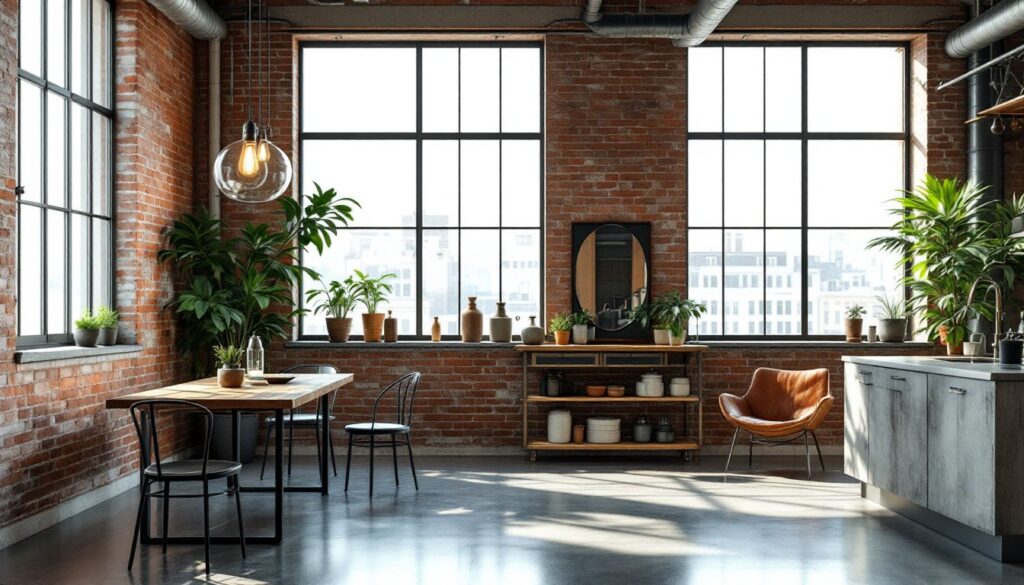
Industrial interior design draws inspiration from early 20th-century factories, warehouses, and manufacturing spaces. Rather than hiding structural bones or covering raw surfaces, this style celebrates them. Exposed brick, steel beams, concrete floors, and visible ductwork become design features rather than things to conceal.
The core philosophy is honest design: materials look like what they are. A steel pipe isn’t disguised as trim, it’s left visible and becomes part of the aesthetic. A wooden table shows its joinery and grain instead of being painted over. This transparency extends to function: industrial spaces prioritize practicality and durability over unnecessary ornament.
What makes industrial style work in modern homes is its flexibility. You don’t need a literal factory footprint to pull off the look. A single accent wall of exposed brick, a salvaged wood and steel shelving unit, or even reclaimed architectural elements can anchor an industrial aesthetic. Many homeowners layer industrial accents into modern interior design to create spaces that feel grounded and interesting.
Key Elements and Materials of Industrial Style
Metal and Raw Materials
Metal is non-negotiable in industrial design. Steel, wrought iron, copper, and aluminum appear throughout, from structural supports and railings to light fixtures and furniture frames. The beauty of metal in this style is that it doesn’t need to be polished or hidden: patina and raw finish actually enhance the look.
Wood in industrial spaces is almost always reclaimed or rough-hewn. Think exposed beams, old barn siding, or weathered flooring with visible knots and grain. If you can’t source authentic reclaimed wood, distressed or hand-planed lumber achieves a similar effect. Pair wood with steel for a classic industrial combination: a wooden table on steel legs, wooden shelves supported by steel brackets.
Concrete is another cornerstone material. Polished concrete floors, exposed concrete walls, or concrete countertops all work within this style. You don’t need to pour a new floor: concrete wall finishes and overlays can be applied to existing surfaces. Brick, especially exposed and unfinished, adds warmth that balances harder materials.
Exposed Structural Features
Visible structural elements define industrial spaces. Exposed brick walls, concrete ceilings, steel ductwork, and wooden ceiling joists are left on display instead of being covered by drywall or drop ceilings. If your home doesn’t have these bones, you can create the illusion: shiplap painted to mimic wood beams, faux exposed brick panels, or structural-looking metalwork installed as purely decorative elements.
When working with genuine exposed structure, preparation matters. Exposed brick should be cleaned and sealed to prevent dust migration. Concrete ceilings may need minor patching or epoxy coating for durability and appearance. If you’re considering removing drywall to expose original structure, confirm it’s not hiding asbestos or other hazards, especially in pre-1980s homes. Hiring a professional inspector is cheaper than risking remediation costs later.
Industrial kitchens and bathrooms often incorporate open shelving made from steel angle iron and reclaimed wood. Open shelving demands organization: clutter reads as messy rather than intentional in an industrial space. Consider also that exposed elements require more cleaning, open shelves collect dust, and visible ductwork needs wiping down.
Color Palettes and Lighting for Industrial Spaces
Industrial color schemes center on neutrals: blacks, grays, whites, and browns. These form the backdrop, allowing raw materials and texture to provide visual interest rather than color. Many industrial homes use a “greige” (gray-beige) as a base wall color, which softens the starkness of pure gray while staying true to the palette.
Accent colors are typically muted and earthy: charcoal, rust, mustard, or deep olive. These tie back to materials themselves, rust from weathered metal, ochre from clay brick, deep greens from aged copper. Avoid bright, saturated colors: they clash with the industrial aesthetic. If a room needs warmth, achieve it through materials and finishes rather than paint color.
Lighting in industrial design is both functional and sculptural. Edison bulb vintage-style fixtures have become clichéd but work because they’re genuine to industrial heritage. Metal pendant lights, exposed filament bulbs, and track lighting all fit naturally. The key is visibility: light sources shouldn’t be hidden behind frosted glass or fabric shades. Steel cage fixtures, bare bulb chandeliers, and industrial-grade track systems are all on-brand.
Layer your lighting: task lighting over work areas (kitchen islands, desks), ambient lighting via pendant fixtures or wall sconces, and accent lighting to highlight textural elements like exposed brick. Dimmers are worth installing, they let you dial intensity from bright and functional to warm and moody. Cold-white LED bulbs (5000K) feel more industrial than warm yellows: reserve warm tones for accent layers.
Furniture and Decor Tips for Your Industrial Home
Industrial furniture prioritizes function and durability over soft comfort. A worn leather sofa, a sturdy wood-and-metal dining table, or an old factory cart repurposed as a side table all read authentically. Look for pieces with visible joinery, distressed finishes, and mixed materials.
When shopping, vintage and antique markets often yield better finds than new retail. Reclaimed architectural elements, industrial shelving units, old factory lighting, vintage metal lockers, add legitimacy that reproduction pieces can’t match. That said, high-quality reproductions exist and cost less than hunting down authentic pieces. Compare function first: does a shelving unit work for your space, or are you buying purely for appearance?
Upholstery in industrial spaces is typically leather (especially worn or distressed), canvas, or heavy linens. Skip plush velvet or delicate fabrics. Industrial design works well with elegant interior styling touches, a leather accent chair, a metal-framed mirror, or vintage storage, if they’re paired with durable materials and honest design.
Accessories keep things sparse. Display artwork on unadorned walls, use simple metal or wooden frames, and keep surfaces clear rather than cluttered. Incorporate functional pieces: vintage scales, old toolboxes, metal canisters. Plants in concrete or metal planters add life without softening the edge.
For kitchens and bathrooms, stainless steel fixtures pair perfectly with industrial design. Industrial ranges, oversized sinks, and visible piping all enhance the aesthetic. If you’re planning kitchen design trends with an industrial lean, prioritize durability and performance over decorative details. Open shelving, visible brackets, and metal hardware keep the style authentic while improving function.
One final tip: leave negative space. Industrial design thrives on visual breathing room. Overstuffing a room defeats the purpose. Let materials, textures, and light define the space rather than quantity of objects.
Conclusion
Industrial interior design rewards thoughtfulness and patience. Rather than rushing to fill a space, start with foundational elements, a feature wall of exposed brick, steel shelving, or concrete floors, then layer in complementary pieces. Focus on genuine materials, honest construction, and functional beauty. Resources like design inspiration sites and home improvement guides offer visual reference, but your best teacher is the materials themselves. When you understand why industrial design evolved from working spaces, you’ll make choices that feel authentic and enduring instead of trendy.