Traditional interior design remains one of the most enduring aesthetics, offering a sense of permanence and refinement that transcends fleeting trends. Unlike minimalist or industrial styles, traditional design celebrates craftsmanship, symmetry, and timeless elegance, creating spaces that feel both welcoming and sophisticated. Whether you’re renovating a century-old home or bringing classical elements into a modern one, understanding traditional design principles allows you to build rooms with depth, character, and lasting appeal. This guide explores how to incorporate traditional interior design ideas into your home, from color selection to architectural details.
Table of Contents
ToggleKey Takeaways
- Traditional interior design emphasizes symmetry, balance, and quality craftsmanship, creating timeless spaces that transcend trends by focusing on proportion and careful attention to detail.
- Neutral wall colors like warm whites, creams, and soft grays form the foundation, while accent colors through rich jewel tones and earth tones are introduced via artwork, upholstery, and accessories.
- Select solid wood furniture with exposed frames and joinery, and arrange pieces in intimate groupings that encourage conversation while maintaining the visual harmony traditional design demands.
- Architectural elements like crown molding, wainscoting, and baseboards add authentic depth and character—install these traditional interior design features with precise measurements and quality finishes to achieve refined results.
- Layer lighting with table lamps, floor lamps, and chandeliers, and combine heavy fabrics, area rugs, and textiles to create warmth and emotional depth without overwhelming the sophisticated palette.
- Apply traditional design principles room by room—symmetrical bedroom layouts, statement dining chandeliers, anchored living room focal points, and period-appropriate kitchen cabinetry ensure cohesive, intentional spaces.
Understanding Traditional Design Principles
Traditional interior design is rooted in symmetry, balance, and proportion. Rather than chasing novelty, it emphasizes quality materials, classic forms, and careful attention to detail. The aesthetic draws inspiration from European and American design from the 17th through early 20th centuries, valuing craftsmanship over mass production.
Key principles include layered functionality, where each element serves a purpose while contributing to the overall composition. A traditional room typically features a clear focal point, a fireplace, a piece of statement furniture, or an architectural feature, around which other elements arrange themselves. Proportion matters deeply: furniture pieces relate harmoniously to room dimensions, and wall treatments coordinate with floor and ceiling heights.
When executing traditional design, precision counts. Measurements must be exact, finishes must be clean, and details must align. This isn’t a forgiving style: a crooked frame or mismatched hardware will feel out of place. The payoff is spaces that feel curated, intentional, and timelessly refined.
Essential Color Palettes for Traditional Interiors
Traditional color schemes draw from nature and historical precedent, favoring warm, muted, and sophisticated tones over bold, saturated hues. Walls typically showcase neutral backgrounds, warm whites, creams, soft grays, or gentle beiges, allowing architectural detail and furnishings to command attention.
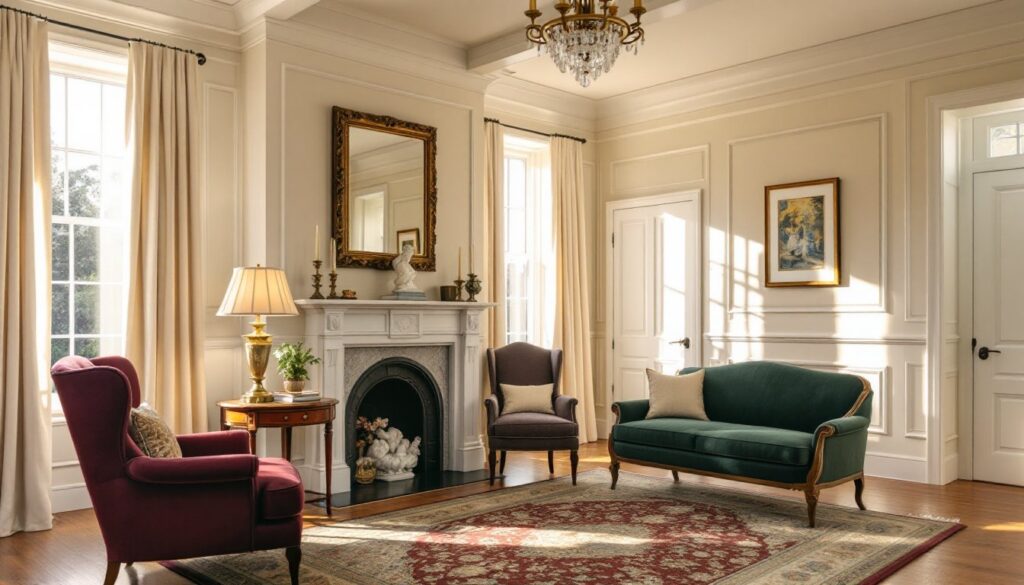
Accent colors emerge through smaller surface areas: artwork, upholstered pieces, window treatments, and accessories. Rich jewel tones like deep burgundy, forest green, and navy blue pair beautifully with gold or brass accents, creating an atmosphere of understated luxury. Warm earth tones, terracotta, ochre, warm taupe, work especially well in dining rooms and libraries.
Paint finish matters. Flat or matte finishes on walls create a sophisticated, non-reflective surface that suits traditional spaces. Semi-gloss or satin finishes on trim, doors, and architectural moldings provide subtle sheen and durability. Always prime walls before painting, especially when transitioning from dark to light colors, and apply two coats for even coverage. The interior design inspiration found in design publications shows how restraint in color creates timeless appeal.
Consider the room’s light exposure. North-facing rooms benefit from warm whites and creams, while south-facing spaces can handle slightly cooler neutrals without feeling cold.
Classic Furniture Styles and Layouts
Traditional furniture emphasizes solid construction, often featuring exposed frames, turned legs, and joinery visible to the eye. Woods like cherry, mahogany, oak, and walnut are hallmarks of the style. Look for pieces with raised panels, dovetail joinery, and hand-carved details rather than veneered or laminated surfaces.
Layout follows the principle of balance and conversation flow. Rather than pushing all furniture to walls, create intimate seating arrangements with pieces angled slightly toward one another. A wingback chair paired with a settee and side table forms a functional vignette. Matching pairs, two identical nightstands, paired bookcases flanking a fireplace, reinforce the symmetry traditional design favors.
When selecting upholstery, choose quality fabrics that age gracefully: wool, linen, velvet, and leather develop character over time. Avoid high-gloss synthetics that look plasticky and date quickly. An elegant interior styling approach demonstrates how quality pieces and thoughtful arrangement create cohesive, refined spaces.
Scale matters tremendously. In a modest living room, an oversized sectional overwhelms the space and breaks visual harmony. Conversely, delicate furniture in a large room appears lost. Measure your room carefully and select pieces proportional to the space, leaving adequate clearance for traffic patterns and visual breathing room.
Incorporating Architectural Details and Moldings
Crown molding, chair rail, baseboards, and wainscoting are the DNA of traditional design. These elements add depth, visual interest, and historical authenticity while also protecting walls from wear.
Crown molding transitions wall to ceiling, creating a sense of refinement and visual closure. Standard heights range from 3 to 6 inches, depending on ceiling height: 8-foot ceilings suit 3-4 inch molding, while taller ceilings accommodate 5-6 inch profiles. Installation requires a miter saw for precise 45-degree angle cuts and blocking or a stud finder to locate secure fastening points. Always use wood filler on gaps before painting, sanding smooth after drying.
Wainscoting, paneling that covers the lower third or half of a wall, adds character and protects high-traffic areas. Frame-and-panel wainscoting, where solid wood panels sit within a frame of stiles and rails, conveys authentic traditional craftsmanship. This style requires carpentry skills: vertical stiles must be plumb, horizontal rails level, and panel fit must be snug. If DIY seems daunting, professional installation ensures flawless joinery and finish.
Baseboards anchor rooms visually and hide the seam between wall and floor. Taller baseboards (6-8 inches) suit high-ceilinged or larger rooms: 3-4 inch versions work for modest spaces. When installing, ensure subfloor and framing are sound: nail baseboards to studs where possible, using 2.5-inch finish nails for durability.
Paint all molding in crisp whites, soft creams, or colors that contrast subtly with walls. Gloss or semi-gloss finishes highlight detail and allow easy cleaning. Kitchen remodeling ideas often showcase traditional moldings as key elements in establishing period authenticity.
Lighting and Textiles in Traditional Design
Traditional lighting favors table lamps, floor lamps with fabric shades, and chandeliers over bare bulbs or minimalist fixtures. Look for brass, bronze, or crystal bases that speak to quality and permanence. Layered lighting, combining overhead fixtures, accent lighting on art, and ambient table lamps, creates warmth and allows adjustable mood.
When selecting shades, natural fabrics like linen and silk filter light beautifully and age gracefully. Pleated or gathered details add texture. Avoid cheap drum shades that flatten the aesthetic. For chandelier-heavy spaces, ensure bulbs are appropriate wattage for the fixture (consult manufacturer specs) and use dimmers to control ambiance without requiring rewiring.
Textiles anchor traditional rooms emotionally. Heavy velvet curtains (or a linen blend for lighter feel) frame windows with weight and substance. Layer window treatments: sheer curtains under heavier panels create depth and control light gradation. Use curtain rods in brass, bronze, or wood, avoiding flimsy lightweight rods that sag under fabric weight.
Area rugs define spaces and add softness: opt for Persian, Oriental, or traditional patterns in wool or high-quality natural fibers. Throw pillows in coordinating fabrics invite sitting and provide color variation without overwhelming the palette. A quality family room design integrates these elements cohesively.
Room-by-Room Traditional Design Applications
Dining rooms thrive with traditional design. A statement-making chandelier, formal table with turned legs, and upholstered chairs create ceremony around meals. Wainscoting on walls adds gravitas.
Bedrooms benefit from symmetry: matching nightstands, balanced bedside lamps, centered headboard. Toile, damask, or traditional floral fabrics on bedding and curtains reinforce period authenticity.
Living rooms employ layered seating, kitchen design trends inform open-concept transitions, and a strong focal point, fireplace, built-in bookcases, or statement wall, anchors the composition. Classical patterns in area rugs and upholstery tie the scheme together.
Kitchens in traditional homes feature inset-panel cabinetry (where doors sit flush within the frame), hardware with period-appropriate styling, and surfaces like marble, granite, or butcher block. Open shelving displays quality dishware: glass-front cabinets showcase china. Beadboard backsplashes and a farmhouse or apron-front sink reinforce the aesthetic.
Conclusion
Traditional interior design rewards patience and intentionality. Success lies not in acquiring expensive pieces, but in understanding proportion, selecting quality materials, and respecting the principles of balance and symmetry. Start with a strong color foundation, add architectural bones through molding or wainscoting, and layer in furniture and textiles with restraint. When executed thoughtfully, traditional interiors offer sanctuary, spaces that feel complete, comfortable, and timelessly refined for decades to come.